Saturday, 15 January 2022

What was Abrahams real name?

I am hoping this post will make you start asking questions around the Bible names really. Abrahams name and the meaning is mismatched. I will show you how.

I hope you are prepared to accept the mismatch in this instance because I can't match it by force. Only when you put both names together are you able to see the truth. 

Let us get to the names.

According to the Bible God changed Abrams name to Abraham. Genesis 17: 5 reads as follows: No longer will you be called Abram; your name will be Abraham for I have made you a father of many nations

The meaning of Abram is said to be Exalted Father. Just search online for the meaning you will find it in reliable sources.

Then Abraham is said mean father of nations as per Genesis 17:5.

I really hope I will clear this one out. First of all, Bantus are believed to have one father called NTU. So with that in mind which name is NTU between Abraham and Abram? I am sure you wont know. What are these names in paleo Hebrew. Abram when you search provides too little as to how it was written in paleo Hebrew, however, Abraham was written as Avraham.

This makes it hard to match Abram in paleo with Bantu. But we will decode this name too.

One thing that we know is that he was addressed as father. Father is Xhosa is tata, baba in Zulu, Ntate in Sotho. It seems Zulu word Baba will fit perfectly as a prefix, however, Ab is used instead of baba . This is because when you call someone the last A is always dropped, but they intentionally dropped the first B as well. You'd say Bab' to call a person. So if Ab in Abram is Father then we need RAM. And no other name comes to mind but NTU because its both have three letters. Abram probably comes from Bab' NTU meaning - Father of the People (ntu) all people with Ntus in their speech. I suspect in paleo hebrew it would be written as BBT. As misspelt would be BRM

But why does the bible say his original name is Abram? I don't know. But all I can say is the exalted father should come from the name Abraham not Abram like this.

Exalted in Zulu is uphakeme from the root word phakama.

See Google translate


It is clear that PHAKAM are in exalt based on the second example Phakamisa.

And Phakama sounds similar to Abraham. I hope you can see that. It is impossible for languages not belonging to the same group to share letters, unless they use borrowed words. In this instance Phakama and Abraham rhyme. So it is possible that Abraham was Originally called Bab'Phakama - meaning exalted father. 

How Avraham came about was probably someone removed the first B letter from Bab and was left with Ab'phakama - Secondly P was then changed to R. You would now have Abrhakama, Remove the last A and place it between R and H you get - ABRAHAKAM last key is completely get rid of KA. Then you will now have Abraham. The last thing was then write in paleo as AVRAHAM for whatever reason Av is not Father.

If you don't know Bantu languages, you will think I am making this up. However, we have Google translate which I have no influence over. Even if I want to change anything I am sure it may take a lot of time, the meaning is there online. Just search for yourself.

So all in all, my conclusion was the name Abraham is not the new name but the one God changed. He was changed (if I use bible names) from Abraham to Abram and not the other way.

In Bantu dialects he was changed from Bab'Phakama to Bab'Ntu.

I hope this is clear enough.


What was Jesus' real name?

The key to Jesus name in the His fathers name (I AM). 

The fact that God had a four letter name called YENA clearly means Jesus shared the same name with him. This Yeshua name is clear that someone just added SH to YENA and got YESHNA and then they changed N to U to have YESHUA.

Jesus was sharing the name with God and his name is YENA also.

However, also there are lots of titles Jesus had like - Messiah, Christ and Rabbi (on). 

Let us decode all his names using Bantu dialects.

Firstly when Jesus was named his naming is clear that it was based on his purpose on earth

Matthew 1: 21 reads as follows: She will give birth to a son, and you are to give him the name Jesus, because he will save his people from their sins.

His other names mean Savior, the Anointed One and Teacher

What are these names in bantu dialects

  • Saviour (Messiah) in Xhosa/Zulu is msindisi
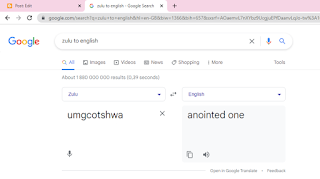
  • Anointed one (Christ) in Zulu is umgcotshwa
  • Teacher (Rabbi) in SeTswana is morutabana
I hope you pick up similarities like this
  • Msindisi to Messiah
  • Mgcotshwa to Christ
  • Morutabana to Rabbi
Let us unpack Msindisi
Msindisi is Messiah as I said and to achieve that you'd do it like this.
First put both Ss together in the middle like this Msindisi to Mssindii. Now turn D to A like this - Mssndii to Mssnaii. Now change one I to E  and then place it between M and S like this Messnai. Ok now change N to H and then put it at the end like this Messaih, lastly swap A and I to get Messiah.

So Jesus title of Messiah was Msindisi in Xhosa/Zulu

Let us now unpack Christ


I suspect in paleo hebrew um'gcotshwa was written as CTSH without vowels. I took out G because G seems to be the new way of writing.  Christ in paleo hebrew would be CHRST I hope you can see the similarities between CTSH (gcotshwa) and CHRST(christ). R is one letter that they loved adding in words for whatever reason. So without R the Christ would have been written as CHST. All four letters are the same except that someone scrambled them. 

CTSH and CHST share all consonants when R is removed in Christ.
I hope this is clear. Christ comes from the word umgcotshwa.

Now let us unpack Rabbi

If I were to write morutabana in old bantu letters without vowels I would write is like this RTBN. If I were to write Rabbi also called Rabboni in paleo hebrew without vowels I would write it as RBBN do you see the similarities between RTBN (morutabana) and RBBN (Rabboni). Without vowels RTBN and RBBN ony have T/B difference. So if you chose adding vowels then confusion starts.

So when they call Jesus teacher they said morutabana.


What were Cain and Abel real names?

I know this exercise will get tiring with time. However, I will be unpacking two names again. I am sure I will get where I will unpack more names in a post. 

I will unpack the real names for Cain and Abel in this post.

Let us start with Cain. Cain's name will be reflective of Gods name. I have a whole post speaking about the possible name of God. Read it here What was Gods name.

In Genesis 4 : 1 it reads

Adam lay with his wife Eve, and she became pregnant and gave birth to Cain. She said "With the help of the Lord, I have brought forth a man.

According to paleo Hebrew it was written as Qayin. I do not believe Q was the original consonant used but K. I will show you once I get to the paleo letters what Q stands for. Right now let us focus on Kayin which was misspelt as Qayin. I suspect in paleo it would have been KYN with no vowels obviously if written from right to left would be NYK. But in todays written form it would be KAYENA

See Zulu/Xhosa translations below when you use YENA as Gods name.


Bantu languages may have one or two different words but most possessive words are usually the same. You can see  -ka YENA in both Zulu and Xhosa. If you have read the hyperlinked post of what is Gods name, then you can agree Cains name had Gods name in it. and his name is KAYENA. 

Now let us move to Abel. This one will be a bit complicated but it is doable.

Genesis 4:2 does not give us the meaning but the meaning of Abel is given in many other sources. Just search online. The meaning I got is breath and in paleo hebrew it is written as hevel. Remember I said for me to confirm if the word is bantu I use the one or two letters that are common between paleo Hebrew and Bantu dialect. 

In this instance I wont even go through Xhosa, Zulu or Southern Sotho to match the words as that would make this post to be extremely long. You are free to search Breath on Google translate to confirm how this is scraped out.

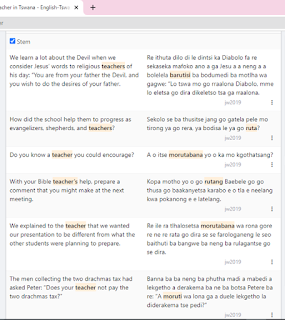
I went with SeTswana. SeTswana is however, not available on Google translate for whatever reason. It is not difficult because there are other source to confirm. In this instance I used glosbe.com. It normally shows how the word is used in a sentence, rather than give you one word answer.

So this is what Breath means according to glosbe.com:


You can see the highlighted words on the right column which are Hema, Hemisa, etc. But what was Abels name in Bantu language you ask - HEMA because breath is hema in SeTswana. Can you see the common letters? H from Hevel and E. The same thing done to Eve is done to Abel. Instead of M - V is used. I have no idea why.  Change V back to M and you will have HEMEL which is still not correct because there is no L in hema. I think intentionally again, the letters are changed and another letter is added also. However, there is enough evidence that Hevel and Hema are the same word. No two languages that don't come from the same group share letters. 

So Abels real name was HEMA meaning breath.

I am still unsure how the mother and father have Sotho names (Madi and Mme) and then Sons have Setswana and Nguni (Hema and Kayena) names respectively. It is possible that all Southern Bantu languages were once one language but with families moving further away from each other and mixing with the nations that were living here, new words were adopted. 

You will see throughout the bible that you cannot use Xhosa or Sotho as your basis. If you do limit the names to one dialect. one name quickly looses its meaning. Just go with the flow. If you are multi-lingual, paleo Hebrew will flow easily. 

I also suspect that us grouping ourselves as Xhosas, Zulus, Sothos, etc. made it hard to see the names in the bible because we are conditioned to only understand our own Bantu dialects. Besides, names are sometimes written backwards, etc which makes it be a matter of solving it first. The bible is clearly all bantu dialects in one place. 

I am interested to know how these people speak. My mind quickly thinks of Soweto people who can speak Sotho and Nguni in one sentence.


What was the temple in Bantu language?

Once you wake up there is no going back. All bible words make sense all of a sudden. 

I was worried that the temple was my biggest stumbling block for the longest time. The temple was the glory of the Bantus and it is the building glorified in the bible throughout. It was the most expensive piece ever made on earth. However, I have never heard of a building called temple and I had no idea what the name of the temple would be in Bantu dialects. Also I could not imagine where it could be located.

This name is the simplest to count the least. Okay to crack the meaning let us look at a few verses to get some idea.

The first one is Solomon's prayer of dedication in 1 Kings 8: 22 - 53. You can read the prayer for your reference. Solomon is over and over saying if people come to the house and pray, then God should respond a certain way. Clearly this place is for prayer.

Isaiah 56: 7 says: these I will bring to my holy mountain and give them joy in my house of prayer. Their burnt offerings and sacrifices will be accepted on my altar, for my house will be called a house of prayer for all nations.

I am highlighting the house of prayer on purpose because the clue is there. The temple is called the house of prayer in Bantu dialects.

Jesus also refers to the temple as a house of prayer see Matthew 21: 13, Mark 11: 17 and Luke 19: 46.

What is a house in Southern Bantu dialects in Zulu/Xhosa it is indlu, in Sotho/SeTswana it is ntlo. Clearly House (indlu/ntlo) does not sound like Temple. What about prayer? Prayer in Zulu/Xhosa is umthandazo. Prayer in Sotho/SeTswana is Thapelo. 

Do you see the similarities - Thapelo vs Temple. Temple cannot be a building because thapelo is not. Thapelo is prayer not a building. But to call a temple the house of prayer is more appropriate . Without the word house, temple is not correct. 


In Acts 3: 1 we can see the purpose of the temple also. It says: Now peter and John were going up to the temple at the ninth hour, the hour of prayer.

The temple had people coming and going there for prayer. The hour of prayer is indicative of the fact that there were specified times to go there.

Now let us do what we did to decode the other names how did temple came about. Well, I suspect that thapelo was written as TPL without the vowels. When the repackaging of the bible happened they simply tossed the word house out and TPL (thapelo) was left. But without the word house, TPL(thapelo) could not be a building at all. Temple has all the consonants except that it added M. Temple is probably TMPL in scrambled written form distorting TPL (thapelo). 

Where was the temple located? That is a good question - my wild guess is Lesotho or Botswana because it has a Sotho name. 


How the world suppress creativity?

This post is purely an opinion and should be read as such.

I have observed time and again that if you recite the Babylonian garbage - you get a clear pass.

Anyone who struggles to tow in the line or get this Babylon education or brainwashing is tossed outside. Many people have lots of ideas but people always see those people as crazy until their ideas are successful.

I am yet to read a story of someone who invented something and was appreciated by people while in the process. The process of invention is the most difficult, the most frustrating and the most misunderstood process. Some give-up because of lack of resources and lack of people who believe in them.

I for one while I was working was never appreciated as an auditor. It was right there that I got my investigative skill horned. I could smell irregularities like a dog. In most cases, it was not what was in the papers that worried my spirit. My spirit had this thing of just seeing something when my superiors could not. The frustration of not being in the decision making also made me leave the corporate world. 

Immediately after resignation, I found myself saying I am getting back to reading the bible. And you won't believe the struggle I had. I was surely beginning to feel like an atheist. I was investigating the bible unknowingly. I would read and then stop. This happened over and over until I realised that no, it must be something good and not bad.

Now, I investigate names, locations, and even things in the bible freely. My previous job helped me to have a structured way of picking up irregularities. What I am writing in this blog is not at all unique but I am certainly sure that you will find things not written about or even not on YouTube.

I feel the most freest now that I can write my results of investigation without someone saying NO everything is above board. 

What have you felt you were good at but someone was suppressing it?


Friday, 14 January 2022

How did Bantu history get stolen?


Since I discovered that the bible is Bantu history I have been asking questions. One of the questions I didn't seem to get an answer to is how was the bible stolen?

How was is it so possible to steal the holy book, change it and leave no trace or memory of it even in people's minds, but bring it back re-packaged. This worried me a lot but the answer is right there in the bible. 

If someone steals something you don't appreciate or pay attention to, how will you remember it?

The bible records time and again that the holy people of book did as they saw fit in their eyes (Judges 17:6, Judges 21:25, etc). Prophets spoke to them but they did not listen (Jeremiah 35:17). Even Moses was worried from the word go (Exodus 4:1) He knew these people don't like to listen to their own people and truly when he told them they did not listen or even believe him (Exodus 6:9) 

So once they were in the promised land these people could not be turned away from evil. They were attracted to it so much so that even after the holy scriptures were stolen, no one cared. No-one remembered the name of God. No-one remembered the destroyed temple, until Nehemiah.

The temple seems to be where all the holy scriptures were stored. People did not do what God had told them and that was to write the laws on doorposts (Deut 6: 9). If they had done that, I believe someone would have picked up that the bible is similar to our stories except for the names of people and locations.

2 Kings 17: 13 - 20 is descriptive enough of what was the state of the nation when Babylon invaded the land. It is scary and unbelievable. I suppose the people did not know they had the true God? Why did they see other nations practices enticing? I do not know.

Daniel 1: 2 also shows that many things were taken from temple by the Babylonian kingdom.

I am sure as you read you would say but it is also written that they went back to Israel after the Babylonian captivity. Thats true. I do not deny it. The above was just to show you the type of people they are. They are quick to forget. The very same word God used to warn them, not to FORGET. So if the older generation forgets God, what is the hope for the younger generation? None. Apple begets apple or apple does not fall far from the tree. 

The new testament however, has three groups -

1. the ones who don't know the laws

2. the ones who think they live laws perfectly

3. the ones who know the laws but don't believe half of the book

Jesus in his departure leaves a very sad prophecy. That Jerusalem will be trampled by gentiles UNTIL the times are fulfilled. Luke 21: 24.

He again says in Matthew 23: 39 people will not recognize Him until they bless the one who comes in the name of the Lord.

The last thing that I want to mention is the temple (i will unpack the name in another post). The non-existence of the temple is the fulfilment of Jesus prophecy and also is one thing that no-one knows where it was today.

Did people just give up on the temple? No. It was all the fulfilment of resisting Jesus.  

People resisted Jesus and he pronounced some unfavorable prophecies or rather curses. I suppose people forgetting Jesus' existence and his real name also is a sign of how little they appreciated him while he was still walking on earth. 

To this day the name of God in Exodus brought by Moses is forgotten, how God is worshipped is not known but ask about ancestors then you will hear all about it. Who Jesus name was is also not known. What the temple real name is, no-one knows and where it was located no one knows.

Rejecting God and later Christ has indeed made Deuteronomy 28 curses and Jesus prophecies stick. There is complete confusion in the Bantu people. Even the customs that are still being practiced - no-one knows who legislated them or where they come from. It is completely unbelievable that no one soul is the voice of reason among the Bantus. Everything goes right now, just like what was happening in olden days. 

My own immediate family gets lost when I explain the Bible being bantu history. It is like I am telling a fairytale. The circle of resistance, unbelief is with all generations.

Who will wake the Bantu people up?

I get tired trying to explain over and over that the Bible takes place right here. The unfortunate part is our own lands have been renamed numerous times to the point that the original names are completely forgotten.

No-one wants to believe. Instead the brainwash from fabricated history was real. No wonder the temple was destroyed and history was stolen. People quickly moved on after the destruction of the temple. By the time it came back re-packaged no one knew it. 

The gentiles clearly are taking advantage of our forgetfulness. But thankfully everything has expiry date in the bible.

What were Adam and Eve real names?

I know this question is not the question most people ask. No-one is concerned about the real names of the people in the Bible. I only read the easy ones and just skipped through the difficult ones back in the days.

It is only recent that I paid attention to names and how they always have meanings attached to them. Now, since I believe the Bible names have Bantu languages in origin, I kind of crack the code in some instances without any issues.

With some names I am still struggling because no meaning is given. But sometimes meanings are mismatched I suppose intentionally to deceive - I dont know.

But the real Adam and Eve names are as follows

Adam according to the bible means red. Knowing that there is no red person per se, but a person has something red called blood. I then applied southern africa bantu languages to see which one would fit.

Blood in Zulu/Xhosa  - igazi - this word gazi is out

Blood in Sotho/Setswana/Sepedi - is madi


I hope you see what I see. Read madi backwards and you will get idam. For whatever reason the person who read madi may have read it from left to right because paleo Hebrew was written from right to left. After that they changed i to a.

So Adams real name was blood - madi but someone changed it to ADAM

What about Eve - what was Eve's real name the answer is the meaning again. Eve means mother of the living (Genesis 3:20)

Mother in Nguni/Setswana - is mama

Mother in Southern Sotho is mme

Youd ask how is mme - eve. I suspect the name first changed one m to e and then changed the remaining m to v. Like this M for E - M for V and leave the last E. Instead of mme you now have Eve. Quite a process to change this name though. And this is throughout the bible.

I will take you through one or two names at a time. 

If you are still not convinced that Bantu languages were used, you are free to use any other languages outside Bantu dialects. Your meaning should remain the same and also there should be at least one or two common letters between Hebrew and that language.

If you don't know any bantu languages, just use google translate

You are allowed to change you mind

My journey has been one of the lonely ones. I practically reason things alone and try to get answers all by myself. Following this method me...